Freight Forwarding & NVOCC
Plain answers on freight forwarders vs NVOCCs, house and master bills of lading, booking control, and where ocean and air shipments actually go wrong.
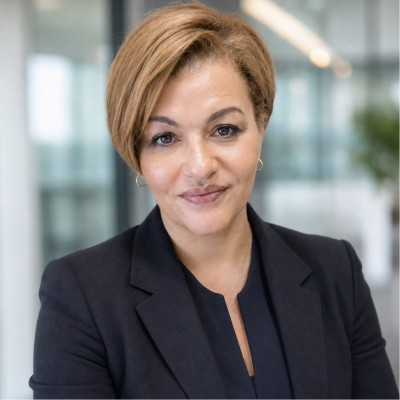
Raja Torain
International Freight & Trade Operations | Machinery, Breakbulk & Time-Critical Moves | 25 Years in Logistics
Raja Torain works in international logistics and trade operations: ocean and air freight forwarding, NVOCC operations, complex and oversized project cargo, tariff and landed-cost exposure, and the internal records and controls behind duty drawback programmes. This is a personal knowledge hub — plain answers to the questions importers, exporters and operators actually ask.
Nine categories, freight first. Categories without published answers yet are marked in development rather than linked to an empty page.
Who contracts, who is liable, whose document releases the cargo.
Flat-rack, out-of-gauge and breakbulk decisions before the equipment is booked.
When a charter is the realistic option and what the comparison actually needs.
Time-critical assessment, subject to cargo acceptance.
Rolling, tracked and wheeled cargo, lift planning inputs and handling capability.
EEI/AES filing, USPPI in routed transactions, denied and restricted party screening, recordkeeping.
Zone structures, production authority and aligning duty payment with the sales cycle.
Educational only: records, traceability and internal controls.
Exposure mapping, HTS classification and what a landed-cost number has to include.
Gateway choice, terminal capability and LatAm lanes.
Plain answers on freight forwarders vs NVOCCs, house and master bills of lading, booking control, and where ocean and air shipments actually go wrong.
Operator answers on flat-rack and out-of-gauge cargo, breakbulk and RoRo choices, survey and lashing requirements, and planning heavy or awkward moves.
Educational explanations of U.S. duty drawback: what it is, what records and internal controls it requires, and what building self-filing capability demands.
How to map tariff exposure by HTS code and origin, recalculate landed cost on open orders, confirm USMCA qualification, and build a decision file before a tariff date.
How Florida's port network is used in practice: gateway selection, Latin America and Caribbean trade lanes, and where inland constraints decide the routing.
21 questions, phrased the way operators ask them.
A freight forwarder arranges transport as your agent. An NVOCC acts as a carrier: it issues its own house bill of lading, takes on carrier liability for that leg, and buys space from the vessel operator under its own contract.
Freight Forwarding & NVOCC
The master bill covers the movement between the vessel operator and the NVOCC. The house bill covers the movement between the NVOCC and you, the cargo owner. Both documents can exist for a single container, and each one governs a different relationship, a different liability and a different release at destination.
Freight Forwarding & NVOCC
Whoever holds the contract with the vessel operator controls the booking, and that is often the NVOCC rather than you. On a routed export transaction, control may sit with your buyer's forwarder instead, which changes who selects the carrier, who sees the rate and who receives the documentation first.
Freight Forwarding & NVOCC
Demurrage is charged for cargo sitting inside the terminal beyond the agreed free time. Detention is charged for keeping the carrier's equipment outside the terminal beyond its free time. The two run on separate clocks, are often billed by different parties, and can both appear on one delayed container.
Freight Forwarding & NVOCC
Normalize the shipment first — same pickup and delivery scope, cargo details, mode and equipment, route and service level, and cargo-ready date. Then compare origin charges, main carriage, surcharges, destination charges, inland delivery, customs/brokerage scope, transit, validity, free time, exclusions and conditional costs.
Freight Forwarding & NVOCC
Origin handling, documentation, terminal charges, destination handling, customs/brokerage work, inland delivery, chassis and drayage, storage, examinations, demurrage/detention and carrier surcharges may be separate, conditional or not yet known. Not every quote must be all-in; the question is whether exclusions and unknowns are visible before you compare.
Freight Forwarding & NVOCC
A spot rate is typically shipment- or short-period-specific and may carry tighter validity, equipment, sailing or cancellation conditions. FAK (“freight all kinds”) is a broader commodity-rate construct used by carriers and NVOCCs for qualifying cargo under stated lane and service conditions. Neither is automatically cheaper; compare validity, space, equipment, surcharges and terms.
Freight Forwarding & NVOCC
Compare the complete door-to-door cost and handling profile, not only the ocean line. LCL adds consolidation and deconsolidation and often more local handling; FCL buys dedicated equipment but may carry unused cube. The crossover depends on volume, weight, origin and destination charges, delivery, timing and cargo sensitivity.
Freight Forwarding & NVOCC
Compare freight cost against the cost of time. Air can make economic sense when a delay would stop production, miss a launch, create high inventory carrying cost, trigger penalties or strand a high-value part. Ocean usually wins on transport cost for non-urgent volume, but the cheapest mode is not always the lowest business cost.
Freight Forwarding & NVOCC
Measure more than whether cargo eventually arrived. Track quote-to-final-invoice variance, transit reliability, exceptions, accessorial frequency, free-time management, document accuracy, customs coordination, response and escalation speed, reporting quality and whether the forwarder brings alternatives before a problem becomes expensive.
Freight Forwarding & NVOCC
Flat-rack transport carries cargo on an open container platform when the assigned equipment, carrier and route accept the packed dimensions, weight and securing plan. Compare breakbulk and RoRo when those conditions fail or another mode better fits the shipment. Choose using written acceptance, complete delivery costs and destination unloading readiness.
Complex & Oversized Cargo
Plan backwards from the longest-lead item, which is rarely the vessel. Permits, route surveys, specialised equipment, heavy-lift availability and lashing approval usually drive the schedule, and several of them run at origin and destination at the same time. Treat the sailing as one milestone among several.
Complex & Oversized Cargo
A route survey confirms the piece can physically reach the berth and the final site: road widths, turning radii, overhead clearances, bridge and pavement load capacity, and any structures that must be temporarily moved. The useful output is a documented route with measured constraints and named alternatives.
Complex & Oversized Cargo
Duty drawback is a U.S. Customs programme that can refund certain duties, taxes and fees paid on imported merchandise when that merchandise — or, in some cases, a substituted equivalent — is subsequently exported or destroyed. Eligibility and timeframes are set in law and regulation, so verify the current rules.
Duty Drawback Education
You need an auditable chain from the import entry through inventory to the export or destruction event: entry summaries, commercial invoices, inventory movement records, bills of lading or proof of export, and destruction evidence where relevant. That chain has to stay retrievable for the whole retention period.
Duty Drawback Education
Self-filing capability rests on four things: clean import and export data, documented internal controls, trained people who own the process, and a system connection capable of transmitting claims and holding the supporting evidence. The controls layer, rather than the software, is where companies usually fall short.
Duty Drawback Education
Build a line-level view of what you import by HTS/HS code and country of origin, then match those codes against the announced measure. Exposure lives at the code-and-origin level rather than the supplier level, so start from the codes actually filed at entry instead of the purchasing system.
Tariffs & Trade Operations
The Incoterm and the contract decide it, not custom or goodwill. Under DDP the seller carries the import duty; under most other terms the buyer does. Read the agreement before the negotiation, because some contracts contain change-in-law or duty-adjustment clauses and many do not.
Tariffs & Trade Operations
No. USMCA qualification depends on the specific rule of origin for the product's tariff classification, supported by documentation — not on where final assembly happened. Rules can require regional value content, a tariff shift or specific production processes, and a supplier's verbal assurance is not qualification evidence.
Tariffs & Trade Operations
Start with which port your trade lane actually has direct services on, then check terminal capability for your cargo type, then compare inland cost to the delivery point. Proximity alone is the weakest of the three signals, and a closer transhipment-only call can be slower than a further direct one.
Florida Logistics & Ports
Short transit times, high service frequency on those lanes, and a dense local base of consolidators and cross-dock capacity make Florida a practical gateway for the region. For smaller shipments the value is consolidation depth: more LCL options and more frequent departures cut the wait before cargo moves.
Florida Logistics & Ports
A recurring series: before answering a logistics question, these are the things I look at first. Same discipline, different problem each time.
Educational only. This explains how the programme works, what records and internal controls it requires, and what a company needs in place to build self-filing capability. It is not customs, legal or tax advice, it is not a filing service, and it is not the work of a licensed customs broker. Confirm your own facts with CBP guidance and a licensed professional before acting.
About the author
Raja Torain
International logistics and trade operations practitioner. Writes about freight forwarding and NVOCC operations, complex and project cargo, tariff and landed-cost exposure, and the records behind duty drawback programmes. More about Raja.
Tell me the commodity, the lane, the packed dimensions and the date it has to be there. I read every message myself.
Or keep reading: freight answers, operating checklists or the Logistics Decision Brief.